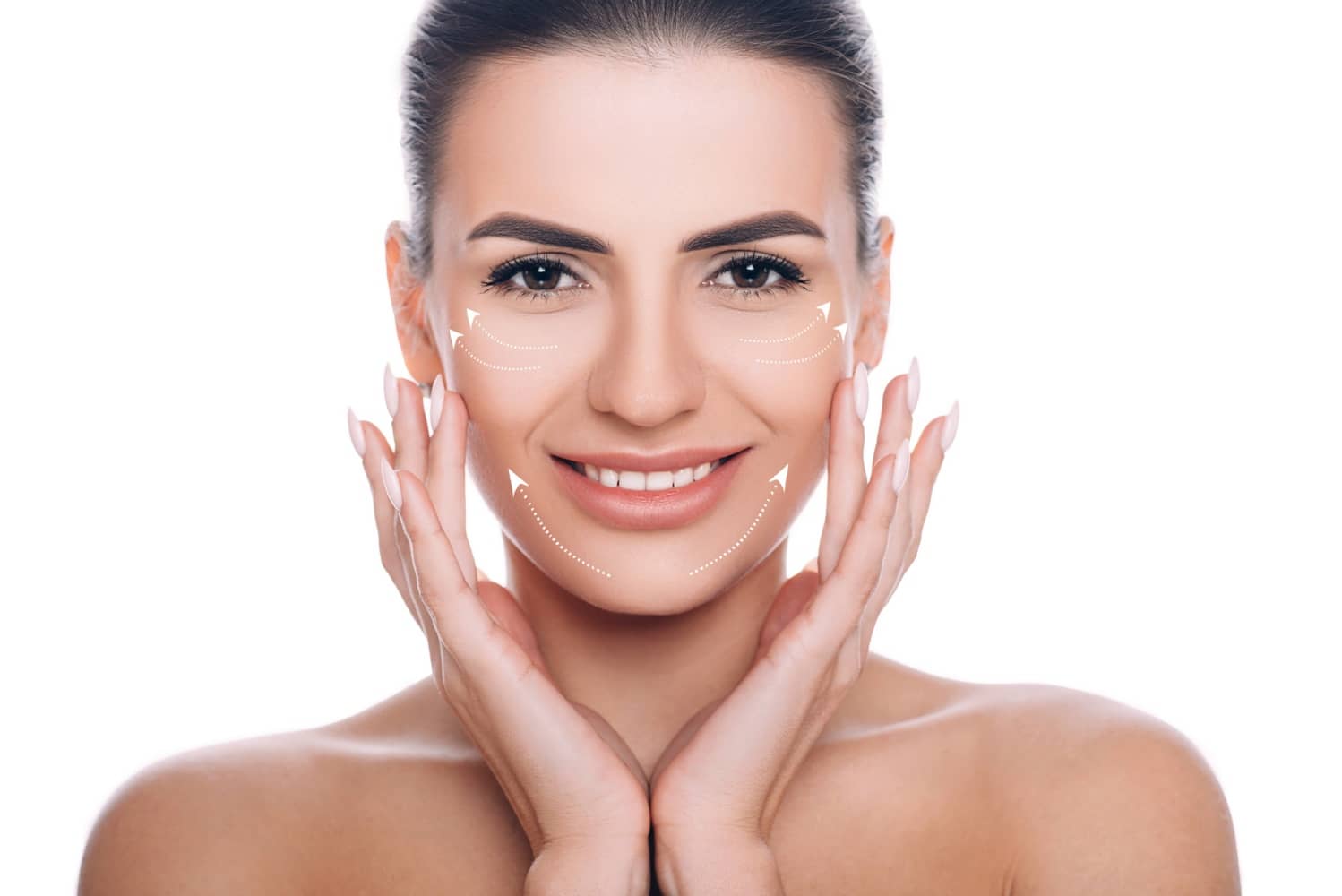
What is a facelift?
The word “facelift” refers to a collection of surgical cosmetic procedures that diminish the visible indications of aging in the face and neck by repositioning, tightening skin and underlying tissues, and removing excess fat and skin.
Lines, wrinkles, and a worn-out, aged appearance result from the skin and muscles losing their suppleness as we age. This results in deep-seated creases and extra skin, especially around the face, neck, and chin. We may get a smooth, defined, and younger-looking appearance by tightening the skin and muscles.
A facelift can improve several indications of aging, such as:
- Sagging or loose skin on the face
- Deep wrinkles surrounding the nose and mouth
- Drooping of skin on the chin and cheeks
- Often referred to as a “double chin,” excess skin or fat in the neck
- Cheek sagging as a result of decreased or absent fat
- Extra skin surrounding the jawline
- The emergence of extra skin after losing weight
What are the different types of facelift?
You can accomplish your objectives with various facelift treatment Dubai. During your appointment, your surgeon will review the different approaches and recommend the best one based on the areas you want to target, your skin’s elasticity, and your face shape.
Traditional facelift
The most popular facelift performed by Dr. Lyor Hanan is a conventional facelift, which works well for mild to severe facial aging and is commonly considered a facelift surgery in Dubai. From one ear to the other, the surgeon creates an incision along the hairline. In order to access and tighten the facial muscles and eliminate extra fat from your face, neck, and jowls, they then separate your skin from the underlying tissue. After that, they stretch the skin back across the face, sew it in place, and trim off any extra.
Mini-Facelift
To minimize scarring, a mini-facelift involves smaller incisions and a less extensive surgical approach than a traditional facelift. Through the incisions, which the surgeon sews up at the conclusion of the treatment, Dr. Lyor Hanan tightens facial muscles and removes excess fat. Patients with milder facial drooping are the best candidates for this kind of facelift. Compared to a standard facelift, it is speedier, less intrusive, and requires less recuperation time, but the results might not last as long.
SMAS facelift
The superficial musculoaponeurotic system, or SMAS facelift, is a procedure that targets the neck and lower face to reduce sagging skin, wrinkles, and jowls. In order to raise the tissue and muscle that droop with age and remove extra skin from the cheeks and neck, the surgeon makes an incision downward from the temple. Although the effects are more modest, it is less intrusive and requires less recovery time than a typical facelift. Because of these factors, it is more appropriate for younger people who wish to treat the early indications of aging.
Mid-facelift
A mid-facelift is a focused surgery that targets the region around the cheekbones and behind the lower eyelids. The surgeon makes tiny cuts within your lips, in your lower eyelid, and along the hairline. After that, they tighten the skin around your cheekbone and realign the fat in your cheek using surgical tools. The purpose is to reduce drooping, smooth the contours, and raise the cheeks for patients considering a facelift for Dubai approach to facial rejuvenation.
Skin-only facelift
A cutaneous facelift, sometimes referred to as a skin-only facelift, is a treatment used to tighten and remove extra skin from the lower face and neck. In order to remove the top layer of skin from the muscles beneath, the surgeon creates incisions in front of the ear. After that, they tighten and eliminate extra skin to prevent wrinkles. The benefits of this therapy may not last long because it just targets the epidermis and not the muscles beneath it.
Dr. Lyor Hanan performs both the conventional facelift and the mini facelift. For people with noticeable and milder indications of aging, Dr. Lyor Hanan believes these two treatments provide the best outcomes.
Which type of facelift is best for me?
That depends on your goals, your age, the severity of your aging symptoms, and where they exist.
For middle-aged individuals, Dr. Lyor Hanan usually suggests a mini-access cranial suspension (MACS). This recommendation is because this technique offers long-lasting benefits with little surgical involvement, and the indications of aging are often rather moderate at this time.
Those who are older, usually in their 50s or 60s, and exhibit more noticeable indications of aging are better candidates for a classic facelift. This more thorough process focuses on the jawline, neck, and face. Additionally, it offers longer-lasting effects and more thorough rejuvenation.
Our doctors, regarded among the best doctors for facelift in Dubai, will take the following elements into account when choosing the best facelift technique for you:
- Your objectives
- The degree of the necessary adjustment
- Aging occurs in the upper, middle, or lower face and neck.
- The incision’s placement, length, and resulting scar
- Skin suppleness
- The soft tissue’s sagging and volume deflation
- Your initial bone structure and facial anatomy
- The amount of time you find acceptable for recuperation and downtime
- Your overall well-being
Things to consider before getting a facelift
Making the choice to get a facelift is a significant one. In the case of a classic facelift, the invasive treatment is often carried out under general anesthesia. Before proceeding, there are a few more things to think about.
Health
You should be in good physical health and free of any illnesses that might hinder your body’s capacity to heal after the procedure or increase the chance of complications, such as diabetes or high blood pressure. Additionally, you should have reasonable expectations for the outcome and be in good mental health.
Age
Those in their 40s, 50s, and 60s are usually the greatest candidates for facelift surgery. They have adequate skin elasticity to guarantee long-term outcomes, but they also exhibit indications of face aging. However, older persons can also be appropriate, as can younger people (such as those who have significantly reduced their weight).
Expectations
A facelift can minimize the appearance of wrinkles and lines while making your face appear tighter and younger. However, it cannot address sun damage and fine wrinkles. After a standard facelift, your face will continue to age, although the effects usually last 10 to 15 years.
Side effects and risks
You should be informed of the risks and side effects associated with any surgical procedure. Scarring, swelling, and possibly some numbness are among the side effects. Possible side effects include hematomas, infections, problems with wound healing, and even damage to the facial nerves. During the consultation, Dr. Lyor Hanan will go over all the complications with you.
Recovery
After your facelift, the surgeon usually takes off the bandages in a few days. After the procedure, your face should be puffy and bruised for around two weeks, but you should feel better after a few days. Following a regular facelift, most patients take at least two weeks off, but following a small facelift, they just take five to ten days off. After four to six weeks, you may anticipate seeing the procedure’s initial outcomes.
Choosing a surgeon
To get a realistic understanding of the potential outcome, choose a surgeon who specializes in facelifts and discuss the expected results, recovery, and factors that may influence the final outcome. Reputable clinics offer free first consultations, allowing you to speak with many surgeons before committing. You should choose a surgeon who has the necessary experience, answers your questions honestly, and is considered among the best facelift surgeons in Dubai.
How much does a facelift cost in Dubai?
Cost varies depending on procedure type and complexity, with mini procedures generally being less expensive than full facelift surgery. Comprehensive aftercare, appropriate postoperative support, and anything else you require for appropriate follow-up care are all included in that fee.
Achieve your goals with facelift procedures performed by Dr. Lyor Hanan
Do not hesitate to get in touch with Dr. Lyor Hanan at the best aesthetic clinic for facelift in Dubai if you are thinking about having a facelift or would like further information. You may schedule an affordable consultation and ask any questions during it. Dr. Lyor Hanan will discuss your options and help develop a personalized treatment plan in a comfortable, supportive setting.